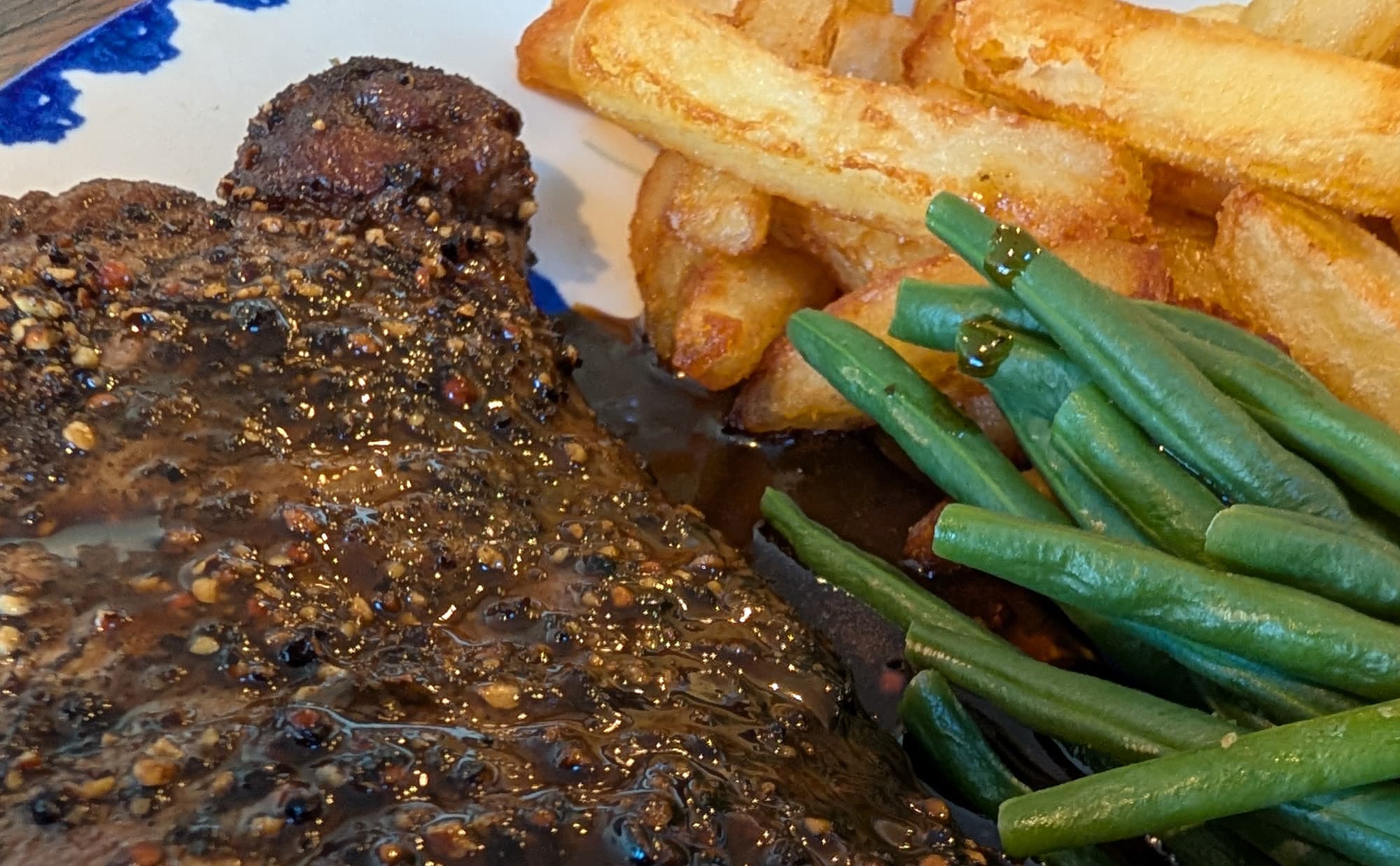
Why This Works Without Smell
This classic dish basically lives in the umami-spicy-texture triangle, which is probably why it's endured as a brasserie staple for so long. Alongside the salty crunch and slight sweetness of triple-cooked chips, this is one dish your mouth will enjoy, even if you cannot taste at all.
The trick is to cook the peppercorn crust on a high enough temperature that the pepper stops being overwhelming and instead becomes exciting, while not cooking for too long and risk overcooking the steak.
The sauce here is the classic version and is simplicity itself. Reducing the beef stock beforehand and finishing it off by whisking in a slab of butter will help create a rich, velvety gravy that pushes the peppery intensity to the max. Adding cream and mustard, as many recipes suggest, transforms it into a peppery steak Diane, which has its place for sure, but lessens the impact of the peppercorns, which is the focus of the dish.
As for triple-cooked chips, well, they aren't strictly necessary (you can just make normal chips) but triple-cooked chips have such a crunch on the outside and a soft fluffiness on the inside, that it really elevates the texture of the whole dish.
I serve this with lightly cooked green beans, for a hint of freshness.
Ingredients
Triple-cooked Chips
- 4 - 5 large potatoes
- 3 litres neutral oil, such as sunflower, groundnut or rapeseed
- salt
Steak au Poivre
- 2 sirloin steaks, about 250g each
- 50g black peppercorns, crushed in a pestle and mortar
- 30 - 40ml cognac or brandy
- 100ml reduced, good quality beef stock
- 40g unsalted butter
- 2 tbsp neutral oil
Method
1. Prepare and parboil the potatoes (the first cook)
Peel and cut the potatoes into large chips. They need to be large, as they have to withstand a lot of cooking without losing too much of their bulk. Soak them in salted water for about 30 minutes, but a little longer won't hurt.
Plunge the chips into a large pan of boiling salted water and cook them on a high heat until the edges of the potatoes are starting to get rough. The rougher the better, as far as crunch is concerned, but you don't want them to be mash, so keep an eye on them.
Drain them and leave them to cool before putting them in the fridge for as long as you can - at least a couple of hours, preferably longer.
2. The first fry (and second cook)
About an hour before you want to eat, heat your oil in a deep fat fryer or large saucepan with a frying cage to about 150 degrees C.
In two batches, plunge the chips into the oil and shake, carefully, to ensure they don't stick together. At this point I usually reduce the heat to 130 degrees C. Let them fry for just under 10 minutes, shaking occasionally to roughen up the edges even further, until they are cooked through and just starting to firm up, but haven't coloured at all.
Remove from the oil and let them drain for a minute before spreading out in a layer on some kitchen paper and gently rolling around to remove the excess oil. Set aside.
Turn off the oil.
3. Pepper the steaks
Lightly brush both sides of each steak with 1 tbsp of the neutral oil.
Spread out the crushed peppercorns in a dish and push each side of each steak into them to create a thick coat of pepper. It will seem like too much, but it is not, trust me. Set aside.
4. Cook the steaks
Add 1 tbsp of the oil to a large frying pan and put on a high heat, adding about 1/3 of the butter and letting it melt and foam.
When the pan is hot, put the steaks in it and move them around slightly to stop any exposed meat from sticking. They should make a loud, sharp sizzling noise and if you can smell at all, you will be hit by a very powerful smell of pepper. Sprinkle a little salt on the steaks and leave them to cook for a couple of minutes untouched, then flip over, add a little more salt and cook for another couple of minutes.
The peppercorns should have formed a dark brown crust on the steaks, but the steaks themselves should still be tender, not firm, when pressed. It is the crust that is important here, as the peppercorns need to be cooked properly or they will be overpowering in the finished dish.
Remove from the pan and leave to rest in a dish.
Turn down the heat.
5. The second fry (and third cook)
Just before you start cooking the steaks, increase the heat of the oil in the deep fat fryer (or saucepan, if using) to 190 degrees C.
While the steaks are resting, add the chips to the hot oil and shake occasionally.
Cook until they are crisp and golden, with some darker, amber-coloured edges.
Remove from the fryer, drain for about 30 seconds and toss in some kitchen paper to remove excess oil. You can salt them now, if you like.
6. Make the peppery sauce
While the chips are in their second fry, add the cognac or brandy to the frying pan and deglaze, scraping the peppery, sticky dark fonds from the pan.
Add the stock and reduce on a high heat until it's the desired thickness. The thicker it is, the more intense it will taste. Tip in any juices that have run off from the steaks as they rest.
7. Plate up
Add the remaining butter to the frying pan and whisk until the sauce is glossy and smooth. Remove from the heat.
Put a steak on a plate, pour over the rich, intense sauce and serve with the chips.
Lightly cooked green beans make a great accompaniment to this dish.
Tips
The steaks: Anthony Bourdain writes that the cut used for this dish is usually sirloin, but Larousse Gastronomique prefers rump. Personally, I think a fillet steak does well here, as you can cook it on a really high heat, properly roasting the peppercorns, but still have it rare in the middle.